 Lively
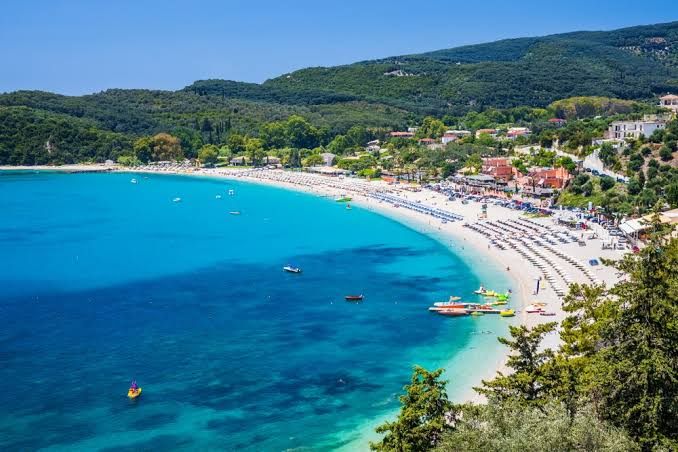
Valtos
A long stretch of pebbles and sand, a walk over the hill from the harbour. Sunbeds, taverns and water sports line the back of the beach.
Epirus · Ionian coast · Greece
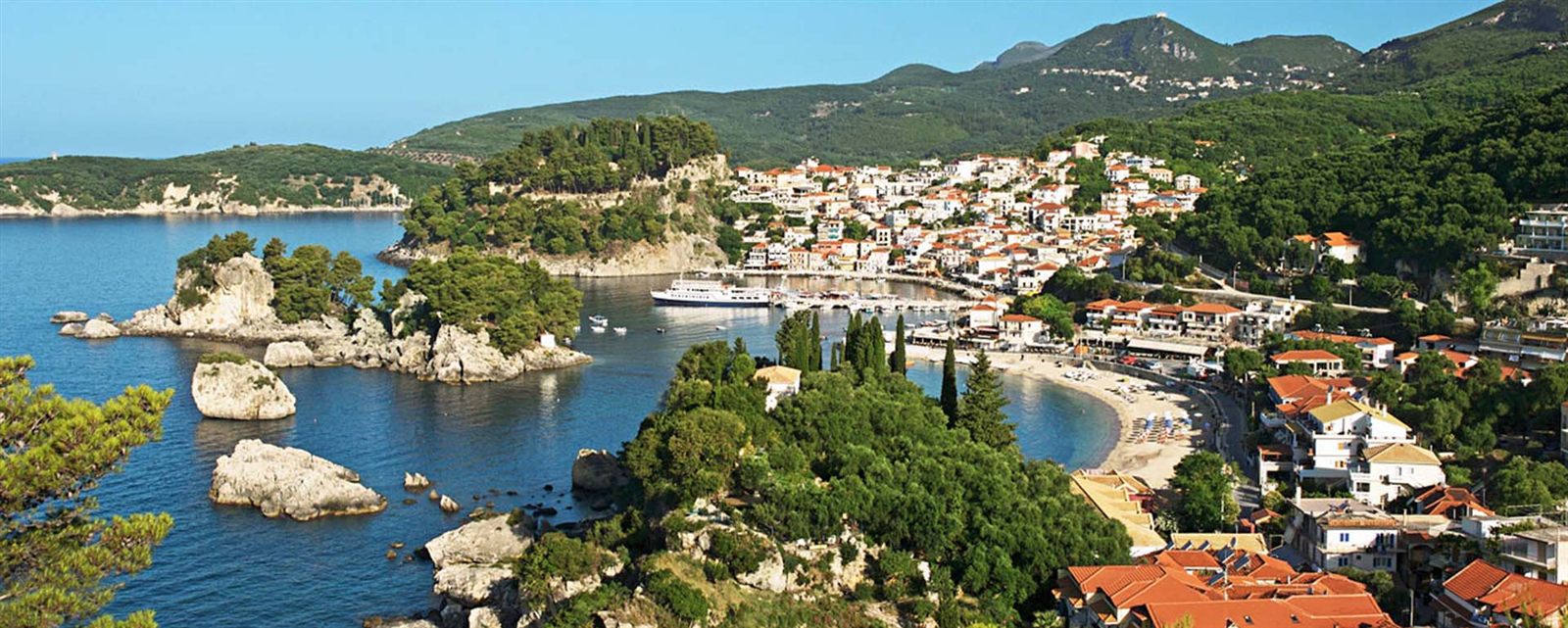
A small harbour town where pastel houses climb a green hill above the bay, with a Venetian castle on top and the sea at the bottom of every street.
Swim
The water around Parga is clear and calm. Pick the beach that matches your day.
LivelyA long stretch of pebbles and sand, a walk over the hill from the harbour. Sunbeds, taverns and water sports line the back of the beach.
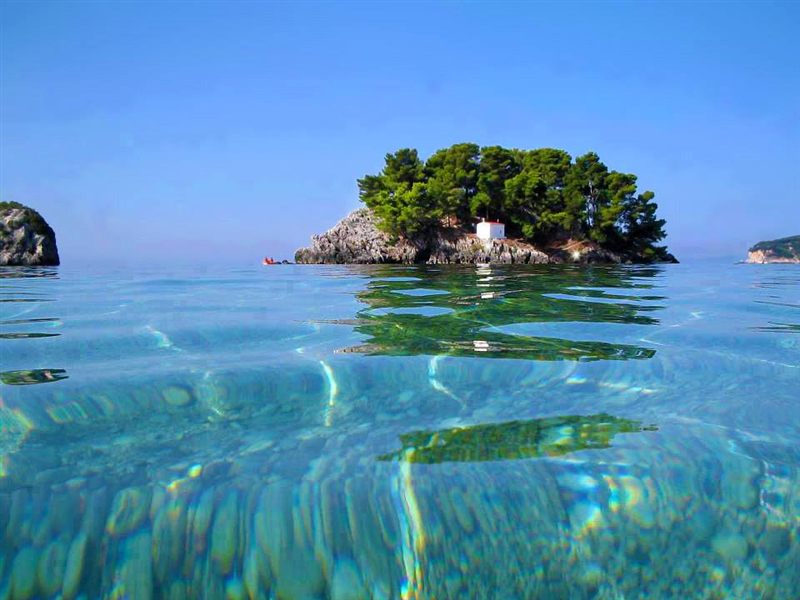 Closest
A small beach right below the old town. The little Panagia islet and its chapel sit just offshore, close enough to swim or paddle to.
 Easygoing
A sheltered sandy bay east of town with shallow water. Good for families and for long, slow afternoons.
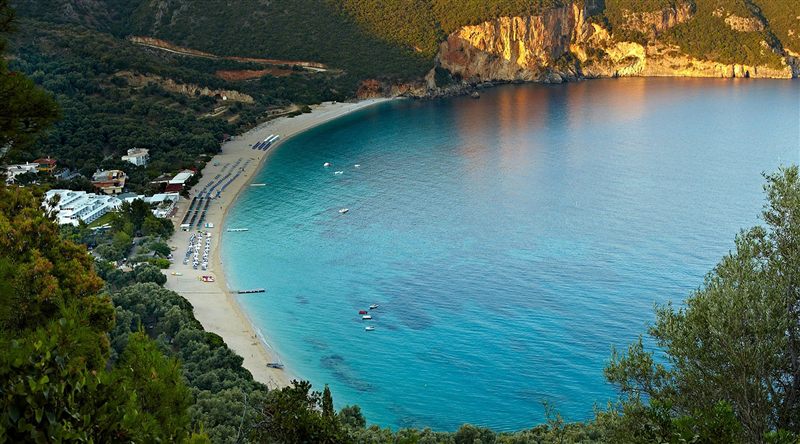
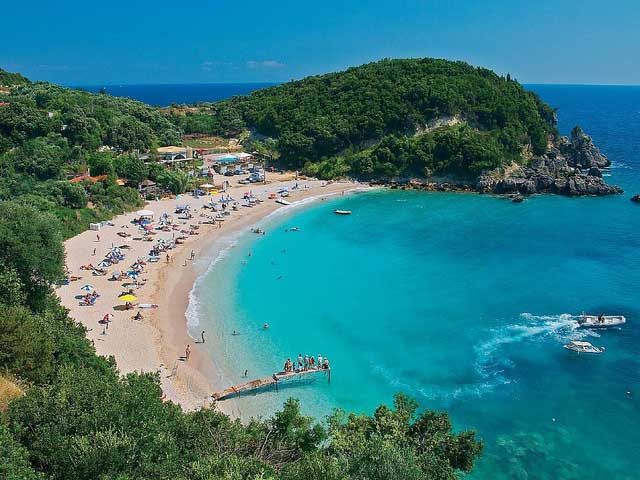 Quiet
A quieter cove with turquoise water, often reached by boat from the harbour. Bring snacks and a mask.
Explore
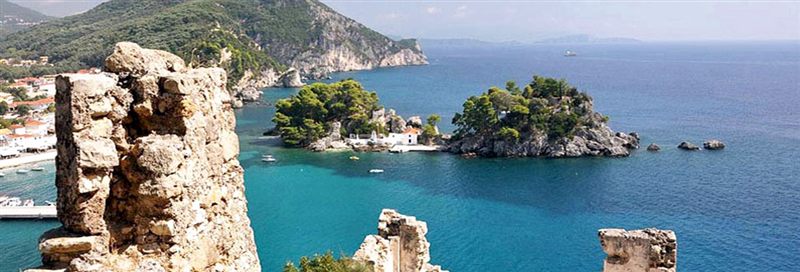
The Venetian castle overlooks the town, both bays and the islands offshore. Go near sunset, when the houses turn pink.
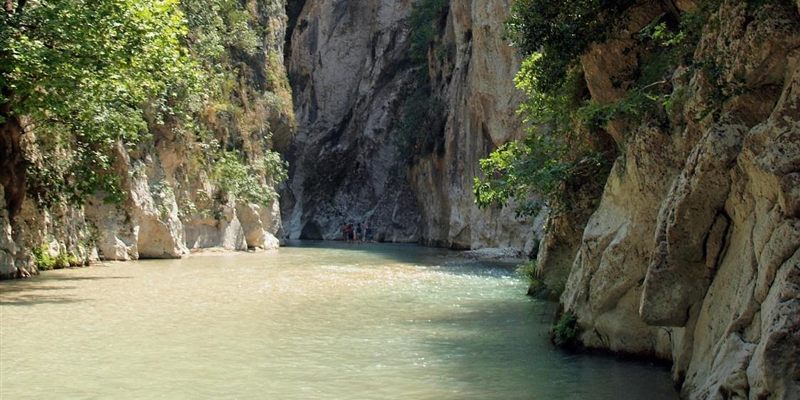
In Greek myth this river led to the underworld. Today you can walk upstream through cold, green water. The ancient Necromanteion of Acheron is nearby.
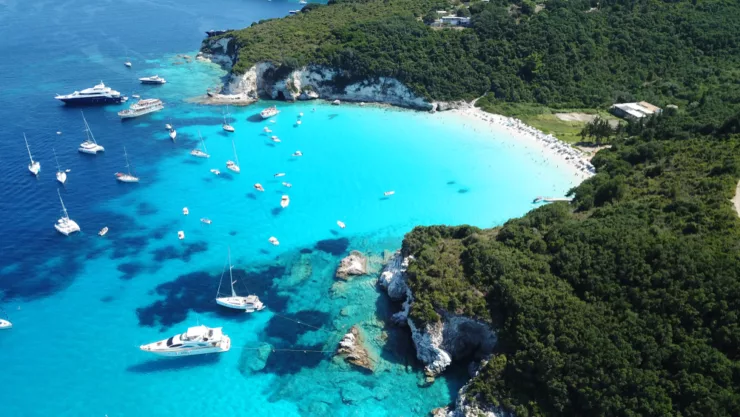
Day cruises leave from Parga harbour for Paxos and Antipaxos, with sea caves, swim stops and lunch on the water.
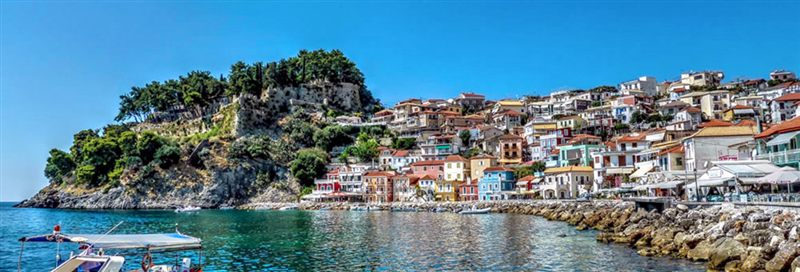
Narrow streets, bougainvillea and harbour cafés. Order fish at the water, then look for Epirus pies, local olive oil and citrus from the groves behind town.
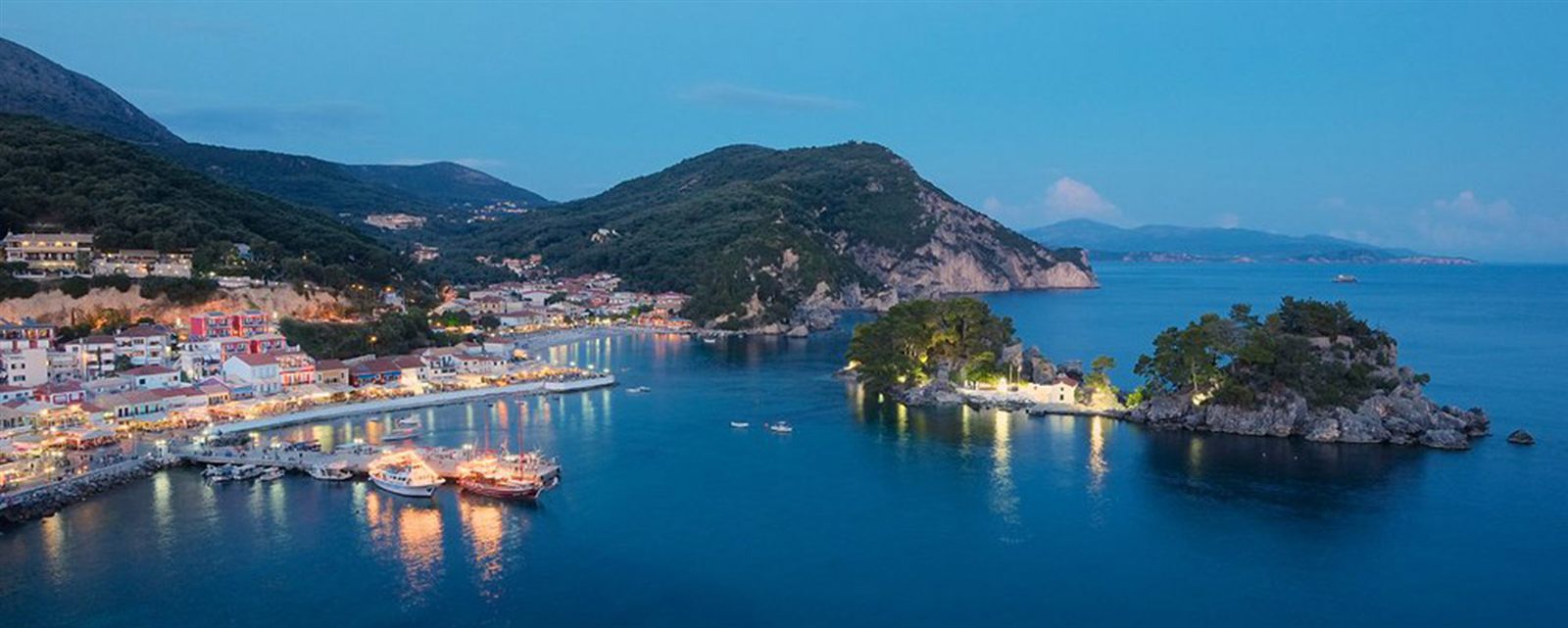
Story
Parga spent most of its past between larger powers, and its look comes from that mix.
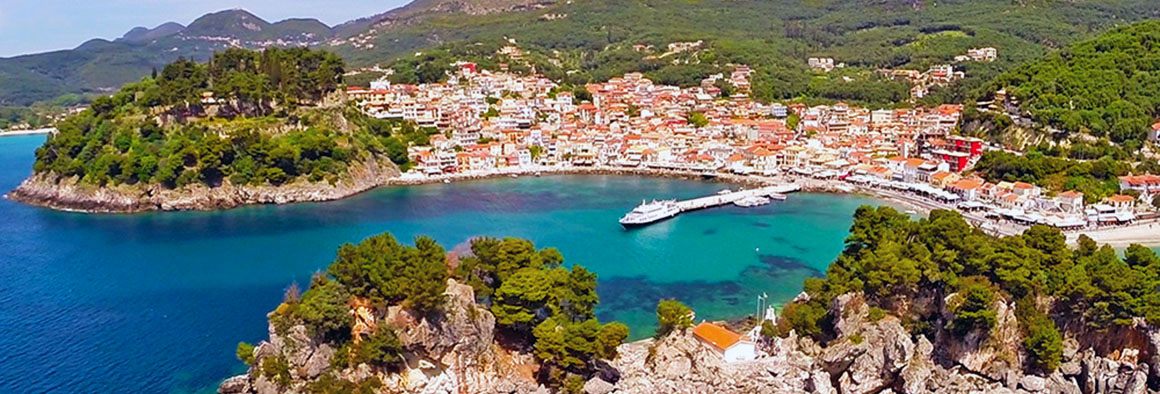
Parga places itself under the Republic of Venice and builds up its fortress.
The Venetian era ends after almost four centuries.
British forces take control of the town.
The British transfer Parga to Ottoman rule. Many families leave for Corfu rather than stay.
After the Balkan Wars, Parga joins the Greek state.
Plan
Green: warm sea, fewer people. Orange: hot and busy.
Fly to Preveza (Aktion) airport, roughly an hour away by road, or take the ferry from Corfu to Igoumenitsa and drive about an hour south.
The old town is walkable but steep, so pack sandals with grip. Taxis and local boats link the beaches.